Symptoms and Causes, Plus How to Prevent this Common Eye Injury!
Corneal abrasions is a scratch on the surface of your eye that can be painful and cause blurred vision. While it isn’t likely to lead to a serious injury, it’s a good idea to manage this eye injury correctly and to follow up with your eye care professional. In this article, we’ll take a look at symptoms of a corneal abrasion and how to treat this eye injury.
What is a Corneal Abrasion?
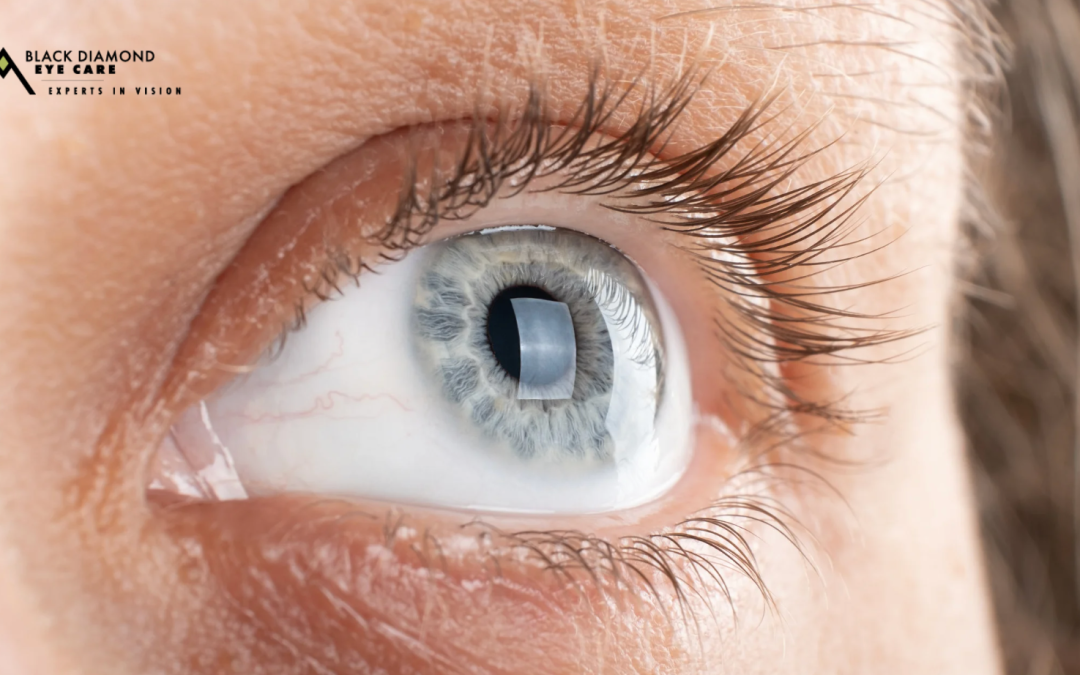
A corneal abrasion is a scratch on your cornea, the clear surface of your eye. Other terms used for corneal abrasion include scratched eye or scratched cornea. As stated above, a corneal abrasion isn’t likely to be a serious injury, but it is important that you make an appointment with your eye care provider to check the abrasion. If the scratch does develop into an infection, it can lead to more damage.
Symptoms of a Corneal Abrasion
A corneal abrasion can be irritating. Some of the signs and symptoms include:
- Eye pain
- The feeling that something is in your eye
- Watery eyes
- Blurred vision
- Red eyes
- Sensitivity to light
- Swollen eyes or eyelids
What Causes a Corneal Abrasion?
There are many ways that the surface of your eye can get scratched. Most often it’s because you get something in your eye while working with tools or by accidentally scratching your eye with your fingernail.
Here are some of the most common causes:
- Dust, dirt, sand, or pieces of plants
- Tiny bits of wood or metal
- Makeup brushes or applicators
- Your fingernails
If you wear contact lenses, you can also develop a corneal abrasion from them if:
- You wear your lenses when your eyes are dry.
- You have contact lenses that don’t fit well.
- You use too much force to remove or insert your contacts.
Those more at risk of getting a corneal abrasion include:
- People who work around eye hazards, like grinding machines or sawmills
- Landscapers who do not wear safety glasses
- Participants in sports that could cause eye injuries
- Those who wear contact lenses
- People who suffer from dry eye
- Anyone who rubs their eyes repeatedly with too much force
When a Corneal Abrasion Becomes Serious
Most abrasions are minor and heal quickly when they are small. However, larger scratches on your eye are more likely to result in complications, including keratitis, corneal ulcers, or iritis (the inflammation of the iris).
This is why it’s so important to see your eye care professional after getting a corneal abrasion. They will be able to check your eye to make sure the abrasion is not a large one that could potentially lead to more serious complications.
You should see your eye doctor if flushing or blinking doesn’t make the particle come out of your eye or if you are in a lot of pain and can’t see well. You should also see your eye doctor if your eye isn’t feeling better after 24 hours of starting treatment. If you are unable to see your eye doctor right away, go to an urgent care center or emergency room, especially if you know something pierced your eye, are in extreme pain, can’t see well or have a sudden decrease in vision, or have fluid coming out of your eye.
Treatment and Management of a Corneal Abrasion
You, or your provider, may start with flushing out your eye with clean water or saline solution. It’s very important that you avoid rubbing your eye, even if you feel like something is in it. If you have something such as a grain of dirt or tiny piece of sharp metal in your eye, rubbing your eye can cause more abrasions and damage. You can also try blinking for a bit or keeping your eye completely closed. It may help to pull your top eyelid over your bottom eyelid, which should make your eye water–this can help dislodge any particle in your eye.
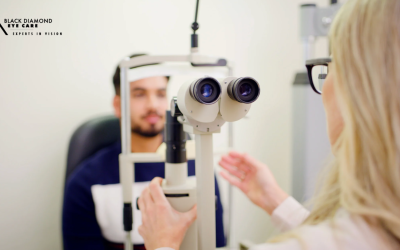
If you have something in your eye, your provider may use a swab or an instrument to remove the particle. They will use topical anesthesia through the form of numbing drops so it won’t hurt.
Your provider may prescribe medication to prevent infection in the form of an antibiotic eye drop or ointment. Your doctor will let you know how long you should use this medication. If your symptoms are not better after three days, you will need to let your provider know.
If your scratch is a small one, pain relievers generally won’t be needed. However, if you do need a pain reliever, your eye doctor may recommend an over-the-counter NSAID. In other cases, your provider may prescribe a topical pain reliever in the form of an eye drop or ointment.
Quite often, eye doctors will use a bandage contact lens to allow the abrasion to heal and to reduce pain associated with blinking. In cases where the risk with contact lenses is high, providers may recommend a pressure patch with gaze or tape instead. There can be a risk of infection with a bandage contact lens, so if you receive one, you’ll need to follow up within one to two days for monitoring.
Healing Time and Outlook
If the corneal abrasion is minor, most people will feel better in one to two days. This is because the cells in that part of the eye reproduce very quickly. Larger scratches will take longer to heal. If your eye isn’t feeling better after 24 hours, you should contact your eye care provider.
Most corneal abrasions heal within a few days, cause no further problems, and your vision should be fine. Eye scratches that don’t heal or respond to treatment could lead to infections or scarring. Both of these things could lead to a loss of vision.
Preventing a Corneal Abrasion Can Save Your Vision!
Reducing your risk of a corneal abrasion is important for preserving your vision. This means using protective eyewear when doing things that put you at risk of an abrasion, as well as practicing good contact lens hygiene.
When should you wear protective eyewear? Use it when you are:
- Working with chemicals
- Doing yard work, like mowing the grass or cutting the bushes
- Participating in contact sports that involve balls (like baseball) or pucks (like hockey)
- Using machinery like grinders, drills, sanders, and welding equipment
- Doing repair work like carpentry or painting
If you wear contact lenses, you can lower your risk of a corneal abrasion by:
- Cleaning and disinfecting your lenses
- Not wearing your lenses longer than recommended
- Not wearing contact lenses when your eyes are very dry
- Not being too rough when you are having a hard time getting your contacts in or out of your eyes
Final Thoughts
Corneal abrasions are a common eye injury. We’ve all had a piece of dirt get in our eyes during a windy day outside, or a piece of dust fall in our eye while cleaning. Flushing your eye with clean water or saline solution can help dislodge the particle. If your injury is more serious or you can’t see well or have extreme pain, you should see a healthcare provider immediately. But most importantly, protecting your eyes during certain activities with protective eyewear can help reduce your risk of getting a corneal abrasion.