4 Treatment Options to Relieve Dry and Itchy Eyes
Dry eye can be irritating and annoying. Whether it’s a chronic condition, caused by allergies, or other environmental factors, it is possible to find relief. Dry eye can be managed with daily home habits, over-the-counter solutions, prescription medications, and even advanced medical procedures. In this article, we will take a look at the different types of treatment.
As always, it is important to discuss treatment options with your provider. If symptoms persist, it is important to talk to your provider about options that can bring deeper, long-term relief.
1 | Daily Habits and Home Remedies
Here are some of the daily habits and home remedies you can try if your eyes feel dry and itchy:
- Conscious Blinking: Practice the 20-20-20 rule. Every 20 minutes, look 20 feet away and fully blink 20 times to spread moisture over your eyes.
- Use a Warm Compress: Place a warm compress over closed eyelids for 5 to 10 minutes. This will soften waxy oils in your glands. You might also consider gentle massage, sweeping downward on the upper lid and upward on the lower lid, to express the natural oils.
- Hydration and Diet: Increase your water intake to stay well hydrated. You might also consider incorporating more omega-3 fatty acids into your diet to improve tear quality and reduce inflammation. Discuss with your doctor whether a supplement or adding foods such as salmon to your diet is the best option for you and to make sure it does not interfere with other medications or supplements you may be taking.
- Environment: Use a humidifier to add moisture to indoor air. Limit exposure to direct air from fans or heating vents as this can quickly dry your eyes out.
2 | Over-The-Counter (OTC) Solutions
These options can be purchased from a store without a prescription. Be sure to speak with your doctor first if you have questions about these products.
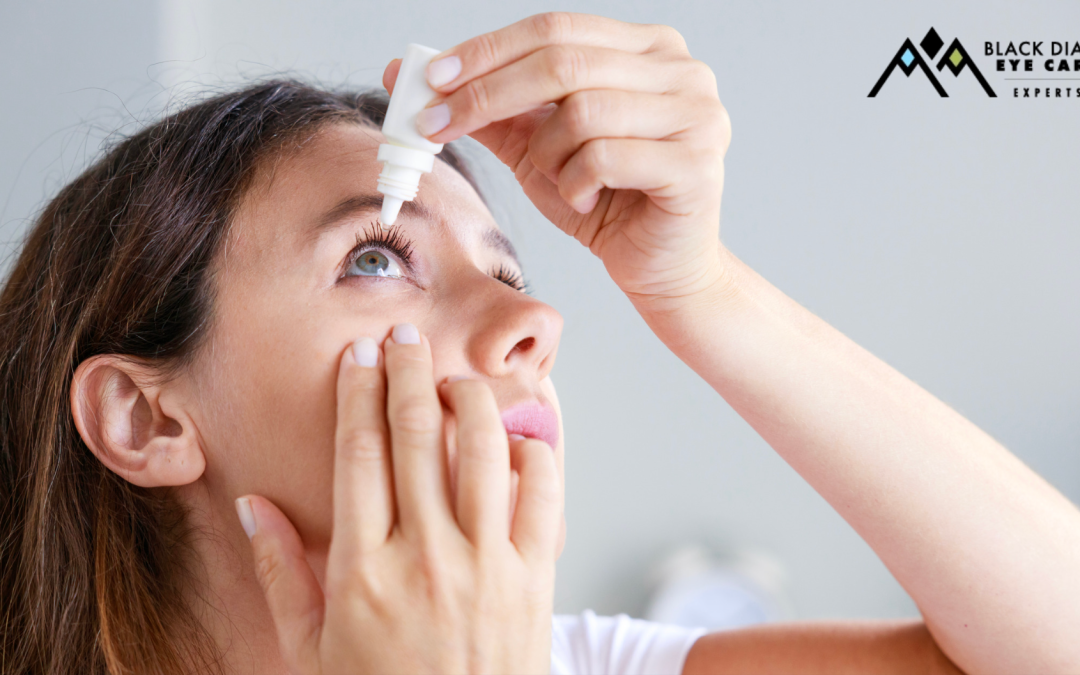
- Lubricating Eye Drops: Use preservative-free artificial tears multiple times a day if you frequently use screens or spend time in dry environments.
- Eye Gels and Ointments: These provide thicker, longer-lasting lubrication and are highly effective for nighttime use, though they may temporarily blur your vision.
3 | Prescription Medications
If you find that home care and OTC options aren’t providing the relief you need, it could be time to consider prescription medications. Schedule an appointment with your eye doctor to understand which prescription option is right for your needs. These are some of the options your doctor might suggest:
- Anti-Inflammatory Drops: These medications treat underlying cornea inflammation while also encouraging tear production.
- Tear-Stimulating Nasal Sprays: These prescription medications chemically stimulate the trigeminal nerve inside the nose, which in turn triggers natural tear production without requiring drops on the eye surface.
- Evaporation-Targeting Drops: Some newer medications coat the eye to physically prevent rapid evaporation of your natural tears.
- Autologous Serum Drops: This is for severe cases of dry eye, and your doctor may formulate special eye drops using a sample of your own blood, which contains natural healing factors.
4 | In-Office Treatments and Procedures
If prescription medications aren’t bringing the amount of relief you need, or if you have other medical reasons for dry eye, your eye doctor might recommend one of these in-office treatments or procedures:
- Punctal Plugs: These are tiny silicone or collagen plugs that are inserted into your tear ducts to block drainage, keeping your natural and artificial tears on the eye surface for longer.
- Meibomian Gland Procedures: This includes in-office treatments such as Intense Pulsed Light (IPL) or specialized pulsed-heat/massaging devices to unclog blocked oil glands, drastically improving tear quality.
- Specialized Lenses: Scleral contact lenses vault over the cornea and maintain a reservoir of fluid to continually bathe the surface of severely dry eyes.
Final Thoughts
It’s important to work with your eye doctor to find the right treatment for the cause of your dry eye. Often, changing your daily habits and OTC options are usually recommended first. If you are not finding relief from those options, make another appointment with your eye doctor so you can escalate your treatment. By working with your eye doctor, it is possible to find relief from itchy, dry eyes.
Need to make an appointment? Black Diamond Eye Care is your comprehensive family vision care provider serving the residents of Castle Rock and surrounding areas. Schedule an exam at our Castle Rock or Castle Pines location to work with an eye doctor to treat your dry eye.